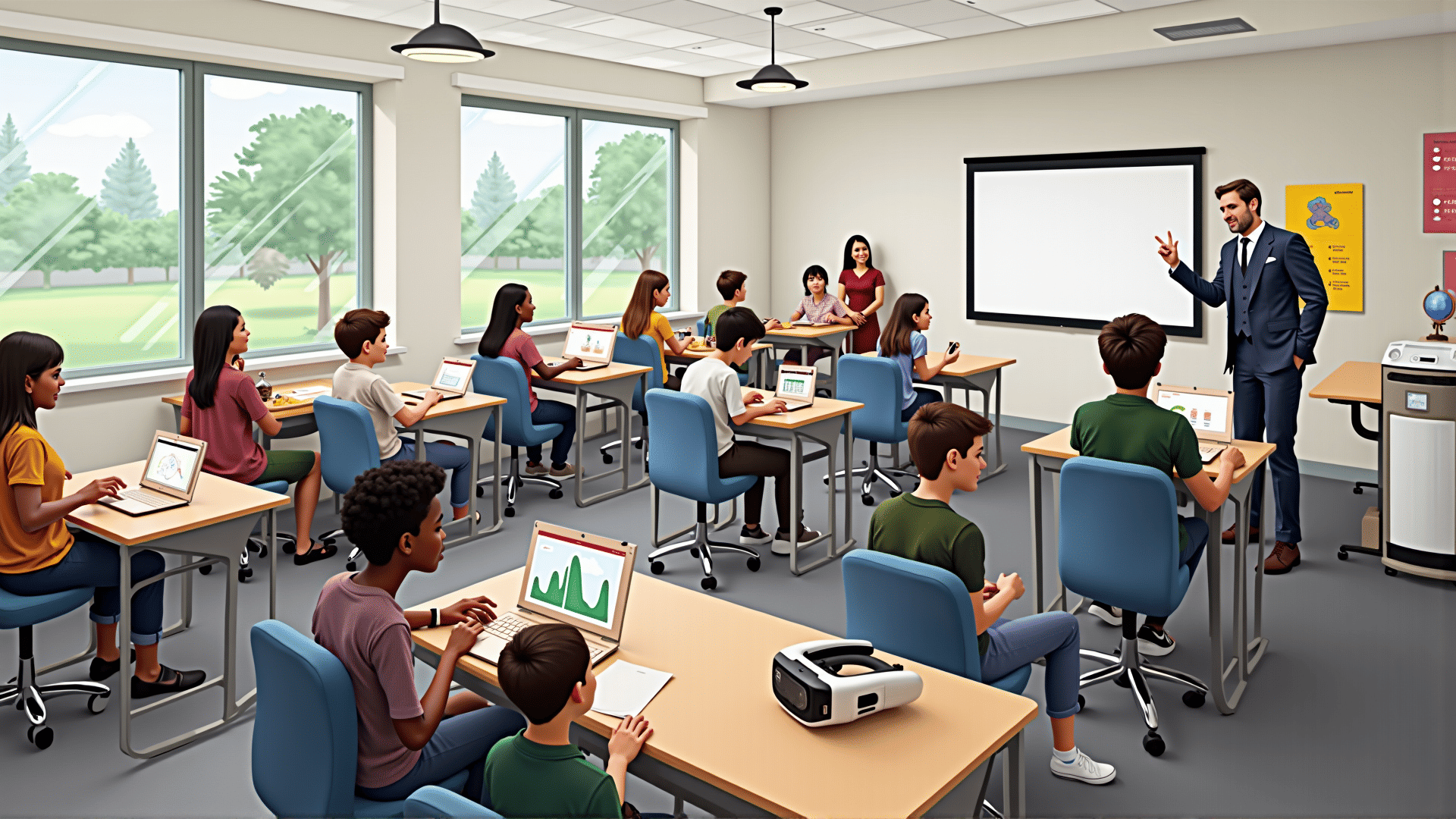
In today’s rapidly evolving world, traditional educational methods are being challenged by innovative learning techniques that promise to enhance comprehension and retention. With the explosion of technology and a deeper understanding of how our brains work, the field of education is experiencing a transformative change. This shift is not merely about incorporating new technologies but also about understanding and utilizing cognitive science to make learning more effective and engaging.
One of the most groundbreaking approaches is the use of adaptive learning technologies. These systems use algorithms to personalize learning experiences based on the individual needs of students. By analyzing a student's performance in real-time, adaptive technologies can tailor the educational content, providing more challenge where needed or offering remedial support in areas where a student may be struggling. This ensures that the learning experience is optimal for each individual, leading to better engagement and outcomes.
Gamification is another technique gaining traction. By incorporating game-like elements into educational activities, students are more likely to be engaged and motivated. Gamification includes elements such as scoring points, earning badges, and even leaderboards to encourage competition. These elements make learning fun, thereby improving retention rates. Studies have shown that when students enjoy what they are learning, they are more likely to remember it and apply it in real-world contexts.
Flipped classrooms have also revolutionized the way education is delivered. In a flipped classroom, traditional learning environments are inverted. Students engage with new materials at home, often through video lectures, while classroom time is used for exercises, projects, or discussions. This approach ensures that students come to class prepared and allows educators to focus on deeper understanding and application of knowledge with immediate support available from teachers and peers.
The use of immersive technologies such as virtual reality (VR) and augmented reality (AR) is providing students with hands-on experiences that are both engaging and educational. For instance, medical students can perform virtual surgeries, history buffs can explore ancient ruins, and chemistry learners can conduct simulations of complex chemical reactions—all without leaving the classroom. These experiences not only deepen understanding but also cater to diverse learning preferences.
Cognitive science has played a pivotal role in reshaping educational paradigms. Techniques such as spaced repetition, interleaving practice, and retrieval practice are being increasingly utilized to improve memory retention and understanding. Spaced repetition involves increasing intervals of review, interleaving practice switches between different topics, and retrieval practice enhances learning by actively recalling information. Together, these strategies make for a comprehensive approach to solidifying knowledge and skills.
Furthermore, peer-to-peer learning has gained popularity as a powerful learning strategy. Encouraging collaboration and communication among students cultivates an environment of mutual teaching and learning. Explaining concepts to peers requires a deep understanding of the subject matter and often helps clarify concepts for the explainer as well. This collaborative approach fosters critical thinking and problem-solving skills, essential for success outside of an academic setting.
Innovative learning techniques have radically changed the educational landscape, promising more personalized, engaging, and effective learning experiences. As we continue to integrate technology with education, it becomes essential for educators to remain informed and adaptive, ensuring that they are equipped to meet the complex needs of modern learners. By embracing these methods, we are not only enhancing our understanding and retention but also preparing a generation for the challenges of an ever-changing world.